
The innovation on show at Airspace World has once again proved that the future is now for air traffic management.




Advertisement

Close

Airspace World 2026 was an outstanding event, bringing together about 7,000 participants, 220 exhibitors, and five theatres packed with valuable content. It sets the agenda for the year ahead, and I am already looking forward to Airspace World 2027.

Simon Hocquard, President & CEO, CANSO
SpaceX alone expects to carry out around 3,000 launches annually in the coming years.

The determination is there, the expertise is there, and the solutions are there. There is a great deal of work ahead, but these are exciting times, because this is work we can – and will – do well.
Be sure to put Airspace World 2027 in your calendar: 25-27 May 2027, Lisbon, Portugal.
But this is not just about increasing capacity and eking out new efficiencies; it is also about doing so safely. That means it is time to rethink the safety conversation. We have always put safety first, and rightly so. That will never change.
But that should not justify an over-reliance on older systems. In today’s changing airspace, putting safety first means adopting new solutions, new procedures and a new mindset. Legacy systems cannot safely manage what is coming next. We need to use artificial intelligence, share data, and rethink our processes, training, and overall approach.
Putting safety first therefore means bringing new technology to market as quickly as possible, not holding it back. That is easier said than done, of course, and there are many obstacles, from funding to regulation. And, of course, all necessary risk management measures must be in place.
Still, from walking the halls at Airspace World, speaking with Air Navigation Service Providers (ANSPs), and listening to the theatre sessions, I am convinced we are on the cusp of significant improvements in air traffic management. Our skies will be safer, seamless and sustainable.
Alignment with a global vision will be vital and this is where CANSO’s Complete Air Traffic System (CATS) comes in. The Concept of Operations we have released will guide our industry going forward and allow us to make the right changes at the right time.
Just as importantly, the event offers the insights and solutions air traffic management needs to plan further ahead. And plan we must. Of the many lessons from Airspace World 2026, let me highlight two.
First, our skies are clearly changing. In higher airspace, SpaceX alone expects to carry out around 3,000 launches annually in the coming years. It will also use its larger Starship rocket more often, which carries roughly 10 times more propellant than the older Falcon and so requires larger areas of airspace to be closed.
At lower altitudes, meanwhile, large-scale drone operations are beginning to emerge. This is already happening in the United States and is likely to follow soon in Europe and other regions. Electric vertical take-off and landing (eVTOL) vehicles are also close to entering service.
Add to this mix more complex civil-military airspace because of geopolitical tensions, extreme weather, and robust demand for air travel, among many other factors.
This brings me to the second lesson learned. Meeting the challenge of these evolving skies will require the faster implementation of new technologies. It is achievable: most of the 220 exhibitors at Airspace World were showcasing proven solutions, and the sheer number of meetings taking place showed that real progress is being made.
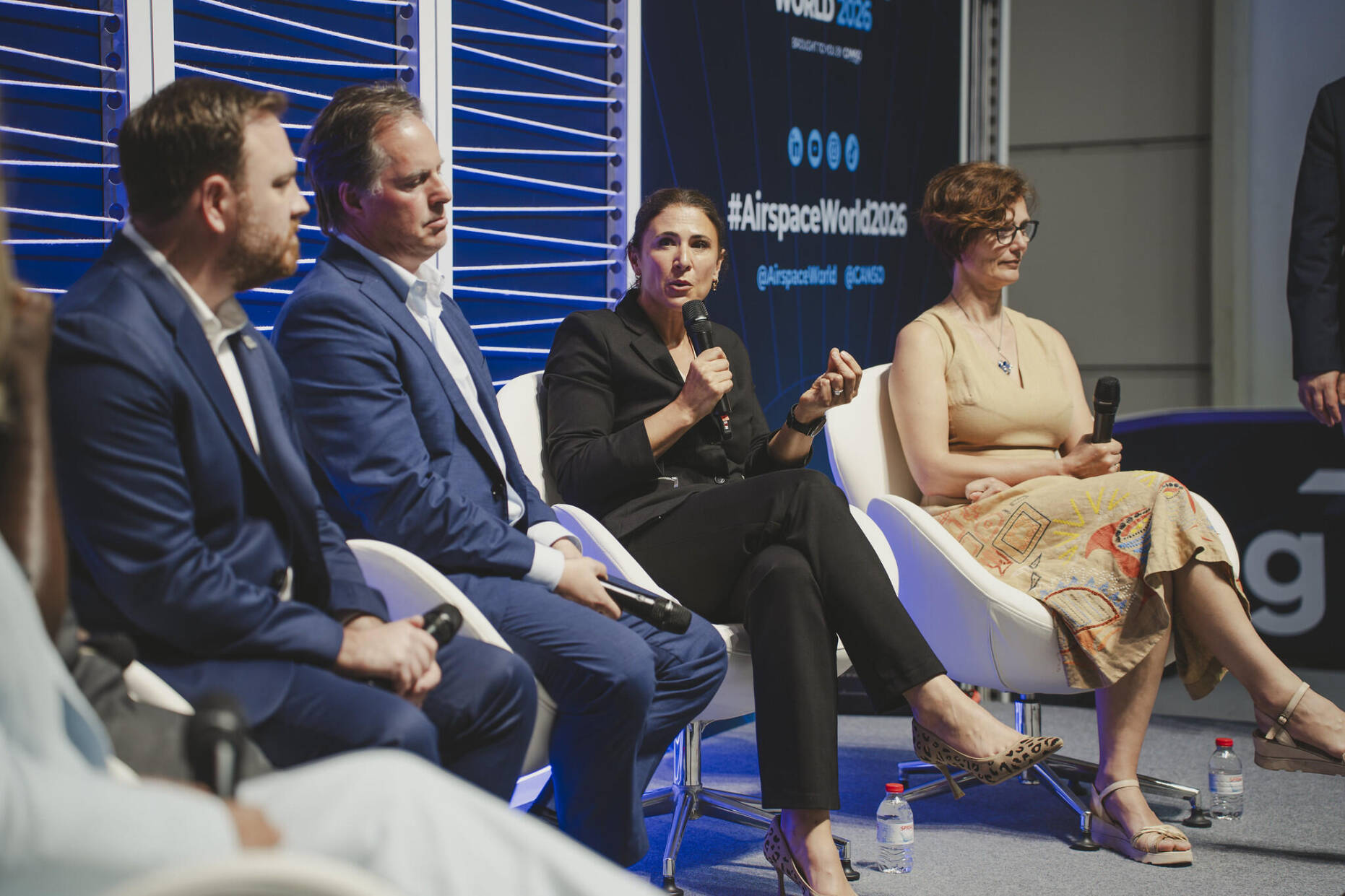
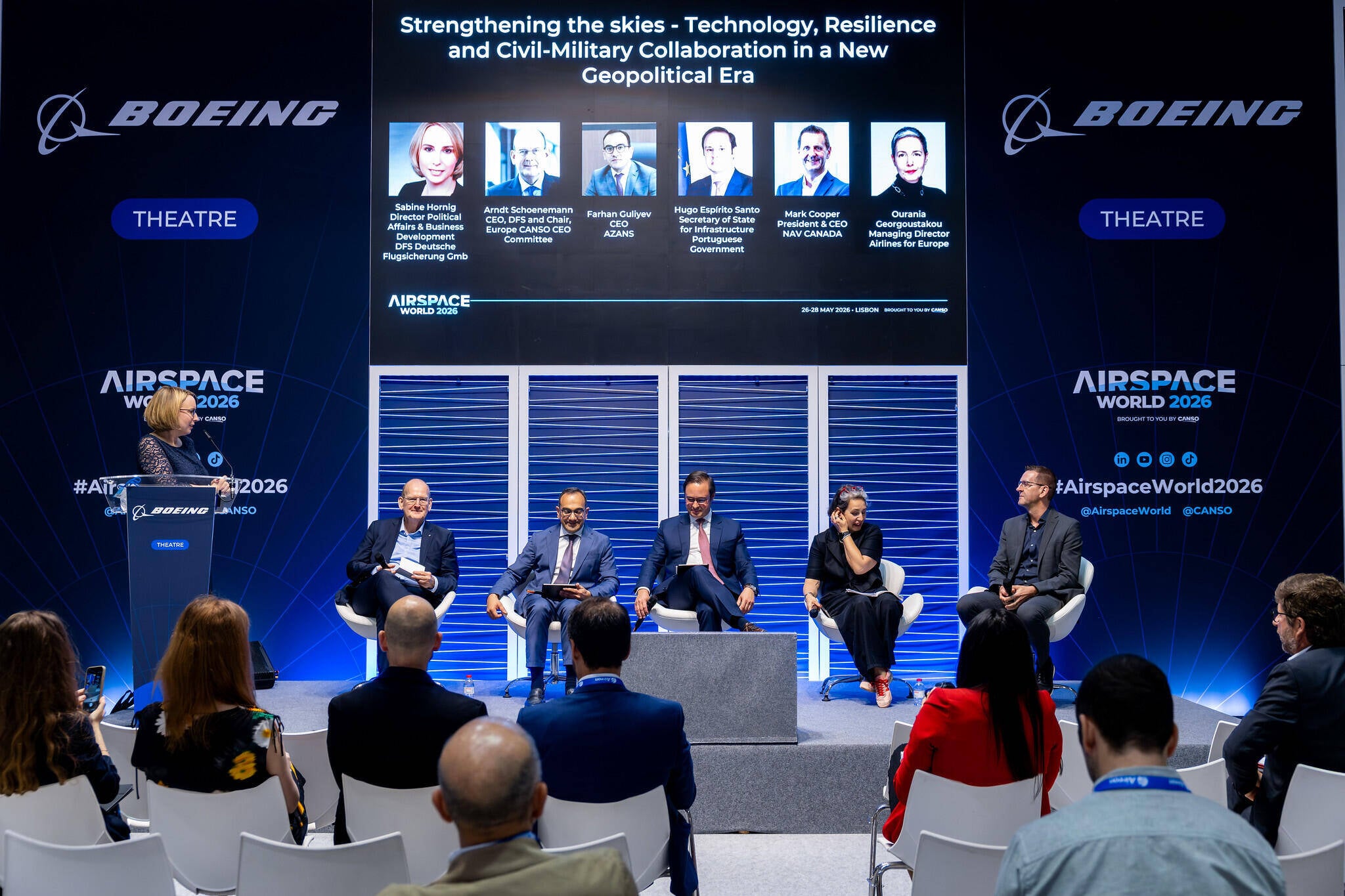
The innovation on show at Airspace World has once again proved that the future is now for air traffic management.



The determination is there, the expertise is there, and the solutions are there. There is a great deal of work ahead, but these are exciting times, because this is work we can – and will – do well.
Be sure to put Airspace World 2027 in your calendar: 25-27 May 2027, Lisbon, Portugal.
Just as importantly, the event offers the insights and solutions air traffic management needs to plan further ahead. And plan we must. Of the many lessons from Airspace World 2026, let me highlight two.
First, our skies are clearly changing. In higher airspace, SpaceX alone expects to carry out around 3,000 launches annually in the coming years. It will also use its larger Starship rocket more often, which carries roughly 10 times more propellant than the older Falcon and so requires larger areas of airspace to be closed.
At lower altitudes, meanwhile, large-scale drone operations are beginning to emerge. This is already happening in the United States and is likely to follow soon in Europe and other regions. Electric vertical take-off and landing (eVTOL) vehicles are also close to entering service.
Add to this mix more complex civil-military airspace because of geopolitical tensions, extreme weather, and robust demand for air travel, among many other factors.
This brings me to the second lesson learned. Meeting the challenge of these evolving skies will require the faster implementation of new technologies. It is achievable: most of the 220 exhibitors at Airspace World were showcasing proven solutions, and the sheer number of meetings taking place showed that real progress is being made.
Airspace World 2026 was an outstanding event, bringing together about 7,000 participants, 220 exhibitors, and five theatres packed with valuable content. It sets the agenda for the year ahead, and I am already looking forward to Airspace World 2027.
SpaceX alone expects to carry out around 3,000 launches annually in the coming years.
Simon Hocquard, President & CEO, CANSO
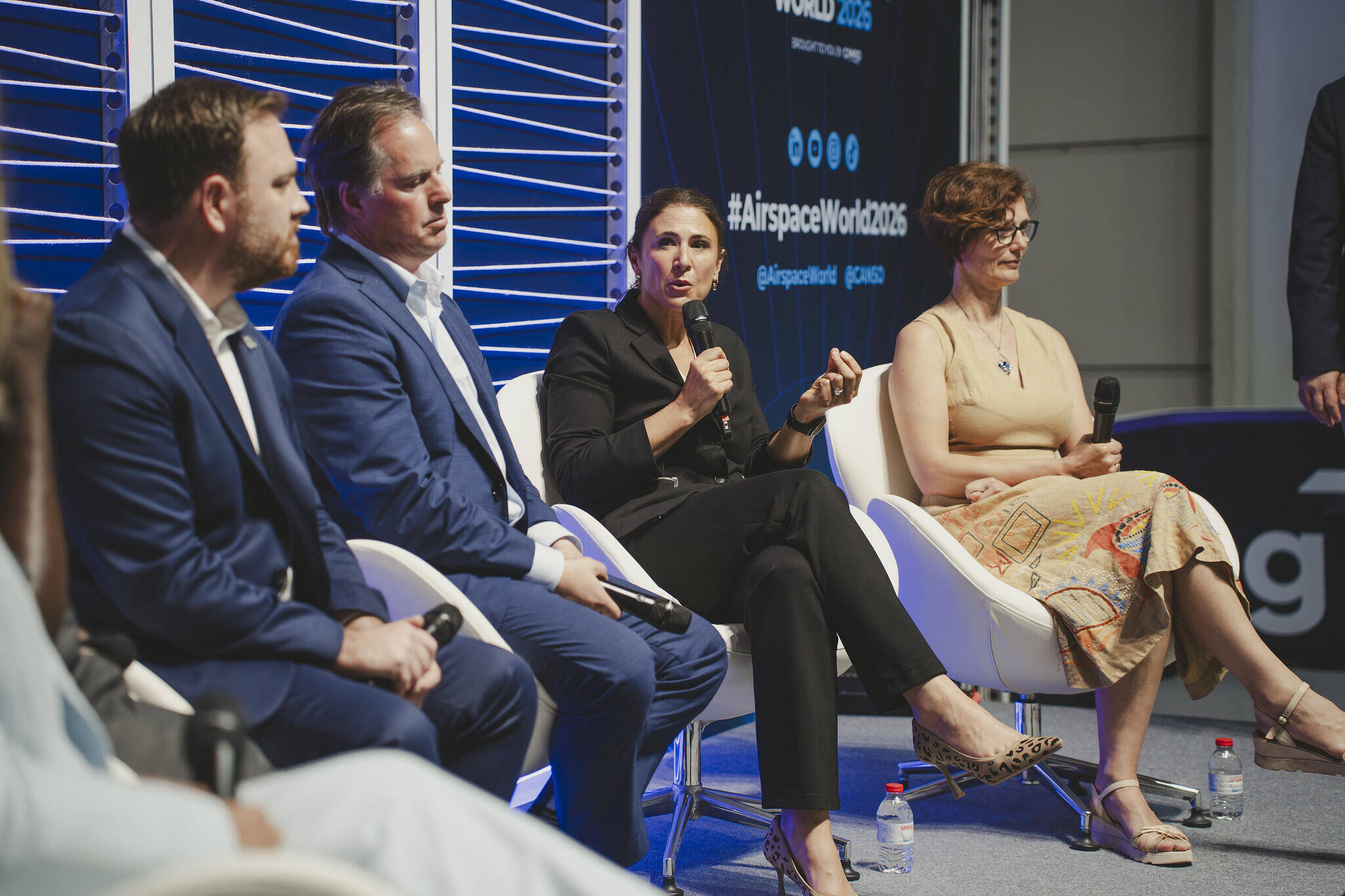
But this is not just about increasing capacity and eking out new efficiencies; it is also about doing so safely. That means it is time to rethink the safety conversation. We have always put safety first, and rightly so. That will never change.
But that should not justify an over-reliance on older systems. In today’s changing airspace, putting safety first means adopting new solutions, new procedures and a new mindset. Legacy systems cannot safely manage what is coming next. We need to use artificial intelligence, share data, and rethink our processes, training, and overall approach.
Putting safety first therefore means bringing new technology to market as quickly as possible, not holding it back. That is easier said than done, of course, and there are many obstacles, from funding to regulation. And, of course, all necessary risk management measures must be in place.
Still, from walking the halls at Airspace World, speaking with Air Navigation Service Providers (ANSPs), and listening to the theatre sessions, I am convinced we are on the cusp of significant improvements in air traffic management. Our skies will be safer, seamless and sustainable.
Alignment with a global vision will be vital and this is where CANSO’s Complete Air Traffic System (CATS) comes in. The Concept of Operations we have released will guide our industry going forward and allow us to make the right changes at the right time.