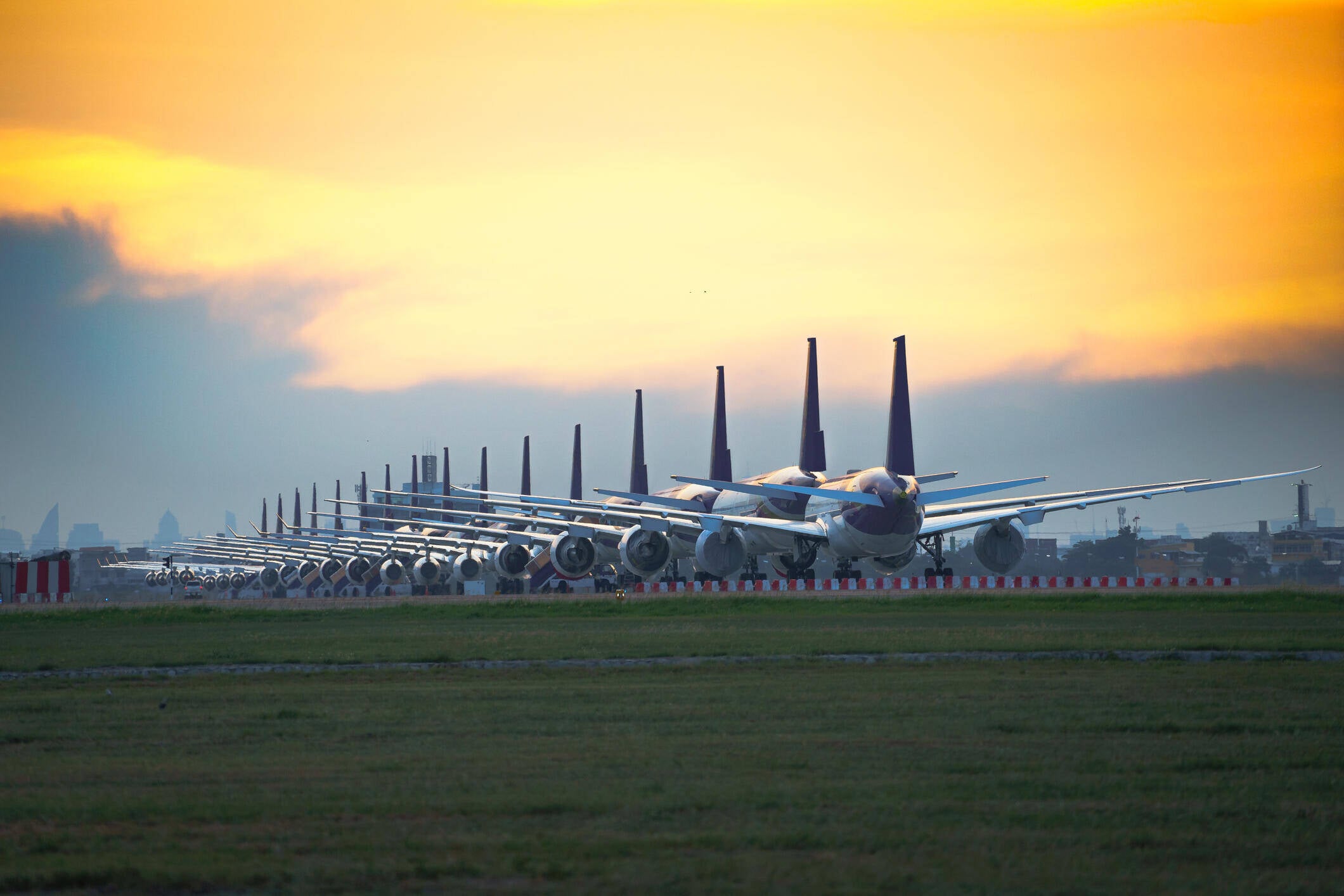
The continued success of SESAR Deployment Manager projects has shaped the evolution of European skies.




Mariagrazia La Piscopia, Executive Director, SESAR Deployment Manager


European airspace continues to evolve. Despite the challenges being faced, a quick snapshot of the progress made under Single European Sky ATM Research (SESAR) Deployment Manager quickly refutes any argument that Europe is not edging its way towards safer, seamless, sustainable skies.
Common Project 1 (CP1) has completed 343 projects as of early 2026. These are estimated to have unlocked €27.8 billion in total benefits with full deployment realising more than €50 billion. Given a €3.1 billion investment, these returns are extraordinary.
Moreover, every euro invested in CP1 saves 4.3kg of CO2. That means more than 21 million tonnes of CO2 have been saved. Passenger time has similarly benefitted with some 430 million minutes shaved off flights.
“Although there are improvements to make, the glass is half full,” says Mariagrazia La Piscopia, Executive Director, SESAR Deployment Manager. “Traffic has increased enormously, particularly in the western side of Europe – there has been a 30% increase in recent years in Spain, for example – but air traffic management (ATM) has shown great resilience.”

Although there are improvements to make, the glass is half full.
As planning begins to turn to Common Project 2, the lessons learned from CP1 are being baked into the process. Key among these is the need to be more dynamic and flexible. This will entail a new service delivery model for air navigation service providers (ANSPs). Rather than each country having different systems and different state-led approaches, the aim is to put the customer at the forefront of all planning. Interoperability will be essential and the mindset must be centred on European airspace rather than national boundaries.
CP1 is a European regulation designed to modernise European ATM. There are six functionalities:
Extended arrival management
Airport integration and throughput
Flexible and free route airspace
Network collaborative management
System-wide information management
Initial trajectory information sharing
Four of the six functionalities are mostly complete, and work is ongoing to accelerate the remaining areas. Some 95% of CP1 is implemented or in progress with a full sign-off expected in about 2030. La Piscopia describes this as a “good result” given the many hurdles, from regulatory approval to differing levels of investment and technical capability.
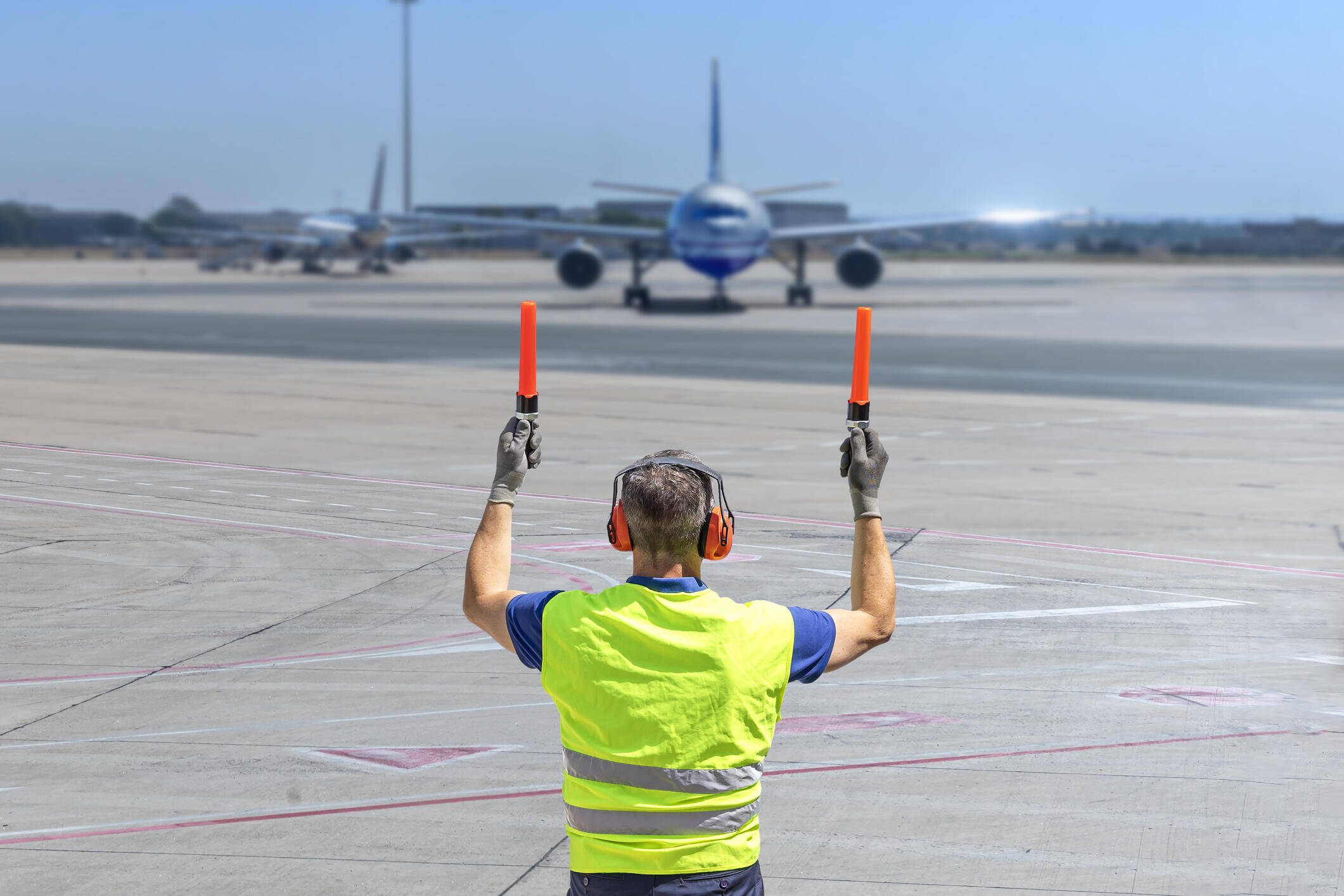
AI will initially play a role in helping to analyse the wealth of data produced daily by European ATM. Trends and patterns will be identified that will assist in tactical and strategic planning and help ANSPs to optimise resources. Again, this reflects back to the need to be flexible and dynamic, responding to disruption and utilising resources where they are needed most.
“ATM innovation should be at the forefront of European thinking,” says La Piscopia. “Europe is well-placed globally in terms of ATM advancements and we shouldn’t lose that advantage. We have a complex airspace and complex challenges, but we must accelerate implementation to remain competitive.”
As evidence, La Piscopia points to the global suppliers based in Europe that are producing cutting-edge solutions and exporting them throughout the world.
Artificial intelligence (AI) is playing an increasing role in many of these solutions but, says La Piscopia, the focus should always be on the air traffic controller (ATCO). “We think of AI in terms of being a support tool for ATCOs,” she says. “This is still a people industry and that won’t change in the foreseeable future.”

Mariagrazia La Piscopia, Executive Director, SESAR Deployment Manager
Funding remains critical if the ideal of a single sky for Europe is to come to pass. “Like every organisation, we are asked to do more with less,” concludes La Piscopia. “We work to achieve that, of course, but we do need European support. ATM is rising up the agenda and the benefits of aviation and the return on investment in SESAR deployment are being recognised. We must continue the modernisation journey together with our operational stakeholders because massive improvements have been made and the work must not be wasted.”

Like every organisation, we are asked to do more with less.


The continued success of SESAR Deployment Manager projects has shaped the evolution of European skies.

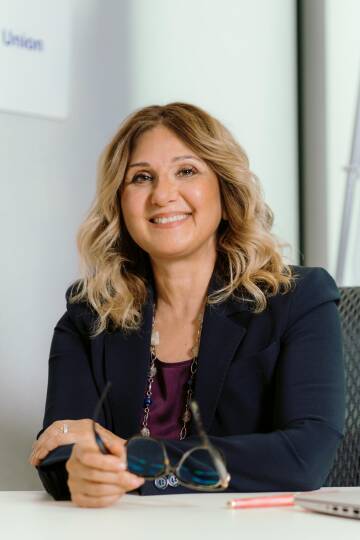

Mariagrazia La Piscopia, Executive Director, SESAR Deployment Manager
Common Project 1 (CP1) has completed 343 projects as of early 2026. These are estimated to have unlocked €27.8 billion in total benefits with full deployment realising more than €50 billion. Given a €3.1 billion investment, these returns are extraordinary.
Moreover, every euro invested in CP1 saves 4.3kg of CO2. That means more than 21 million tonnes of CO2 have been saved. Passenger time has similarly benefitted with some 430 million minutes shaved off flights.
“Although there are improvements to make, the glass is half full,” says Mariagrazia La Piscopia, Executive Director, SESAR Deployment Manager. “Traffic has increased enormously, particularly in the western side of Europe – there has been a 30% increase in recent years in Spain, for example – but air traffic management (ATM) has shown great resilience.”
European airspace continues to evolve. Despite the challenges being faced, a quick snapshot of the progress made under Single European Sky ATM Research (SESAR) Deployment Manager quickly refutes any argument that Europe is not edging its way towards safer, seamless, sustainable skies.
Although there are improvements to make, the glass is half full.
As planning begins to turn to Common Project 2, the lessons learned from CP1 are being baked into the process. Key among these is the need to be more dynamic and flexible. This will entail a new service delivery model for air navigation service providers (ANSPs). Rather than each country having different systems and different state-led approaches, the aim is to put the customer at the forefront of all planning. Interoperability will be essential and the mindset must be centred on European airspace rather than national boundaries.
CP1 is a European regulation designed to modernise European ATM. There are six functionalities:
Extended arrival management
Airport integration and throughput
Flexible and free route airspace
Network collaborative management
System-wide information management
Initial trajectory information sharing
Four of the six functionalities are mostly complete, and work is ongoing to accelerate the remaining areas. Some 95% of CP1 is implemented or in progress with a full sign-off expected in about 2030. La Piscopia describes this as a “good result” given the many hurdles, from regulatory approval to differing levels of investment and technical capability.
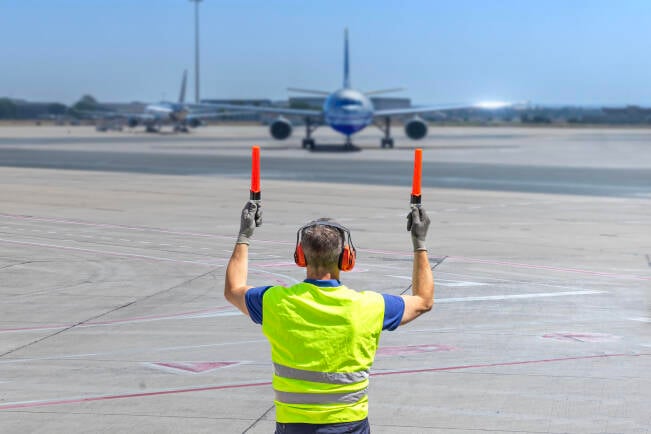

AI will initially play a role in helping to analyse the wealth of data produced daily by European ATM. Trends and patterns will be identified that will assist in tactical and strategic planning and help ANSPs to optimise resources. Again, this reflects back to the need to be flexible and dynamic, responding to disruption and utilising resources where they are needed most.
“ATM innovation should be at the forefront of European thinking,” says La Piscopia. “Europe is well-placed globally in terms of ATM advancements and we shouldn’t lose that advantage. We have a complex airspace and complex challenges, but we must accelerate implementation to remain competitive.”
As evidence, La Piscopia points to the global suppliers based in Europe that are producing cutting-edge solutions and exporting them throughout the world.
Artificial intelligence (AI) is playing an increasing role in many of these solutions but, says La Piscopia, the focus should always be on the air traffic controller (ATCO). “We think of AI in terms of being a support tool for ATCOs,” she says. “This is still a people industry and that won’t change in the foreseeable future.”
Mariagrazia La Piscopia, Executive Director, SESAR Deployment Manager
Like every organisation, we are asked to do more with less.
Funding remains critical if the ideal of a single sky for Europe is to come to pass. “Like every organisation, we are asked to do more with less,” concludes La Piscopia. “We work to achieve that, of course, but we do need European support. ATM is rising up the agenda and the benefits of aviation and the return on investment in SESAR deployment are being recognised. We must continue the modernisation journey together with our operational stakeholders because massive improvements have been made and the work must not be wasted.”