Air traffic management (ATM) is poised for a once-in-a-generation leap



Singapore and Thailand are urging ICAO to lead a global platform for collaboration on AI and to conduct a comprehensive scoping study of current applications while developing guidance for safety-critical uses.
The United Arab Emirates is highlighting the need for the standardised integration of AI into civil aviation authorities’ oversight functions and proposes a global seminar in 2026 to address governance and accountability.
Colombia and the Latin American Civil Aviation Commission are emphasising AI’s capacity to optimise ATM, anticipate congestion, and enable new forms of advanced and urban air mobility – all while underscoring the importance of training and ethical safeguards.
Central American States represented by the Central American Air Navigation Services Organisation (COCESNA) are calling for a robust regulatory framework and capacity-building to ensure that AI implementation is ethical, secure, and effective.
From idea to action
AI and innovation



Eduardo Garcia, Senior Manager for Future Skies
“Our goal is not to discard the principles of current aviation safety,” Garcia explains, “but to reimagine how those principles are applied when human and digital actors share the cockpit of global airspace.”
“AI is not an afterthought in the CATS vision – it is the engine that allows us to manage complexity and growth without compromising safety,” says Eduardo Garcia, CANSO’s Senior Manager for Future Skies.

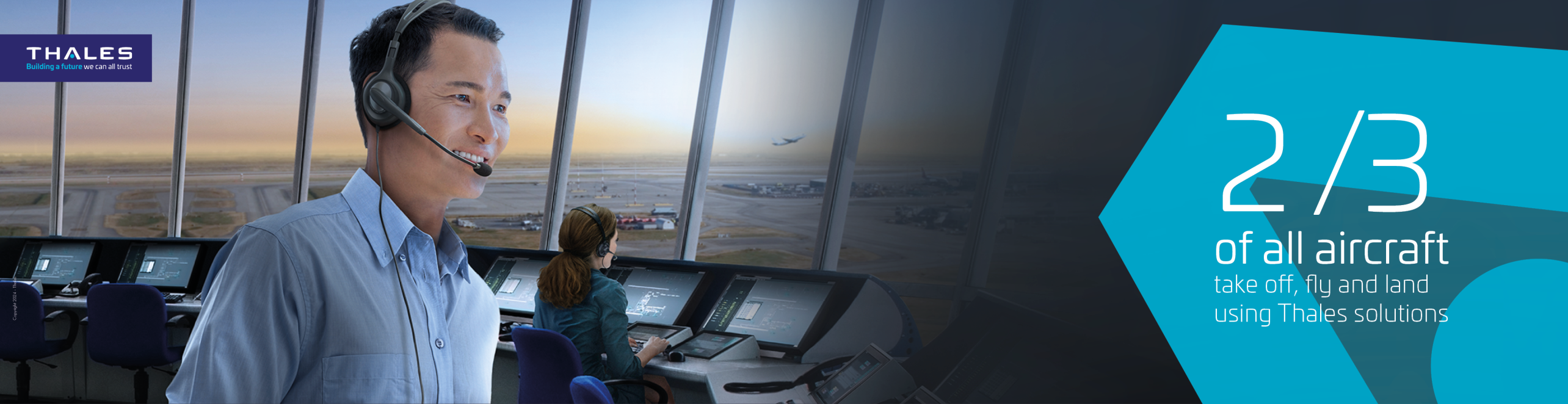
Air traffic management (ATM) is poised for a once-in-a-generation leap. No longer confined to incremental upgrades, the global aviation system is entering an era where digital intelligence and advanced automation will shape every flight and every layer of the sky.
The International Coordinating Council of Aerospace Industries Associations is adding a broad industry perspective, clarifying definitions, identifying opportunities, and warning of challenges such as explainability, trust, and certification. Even the legal dimensions are addressed, with Kazakhstan noting that existing liability conventions do not adequately cover autonomous or AI-directed flights and pressing ICAO to develop a harmonised legal framework for responsibility and compensation.
Together these papers signal a clear direction of travel. States and industry are moving beyond experimentation and urging ICAO to take the first steps towards a shared framework – fostering dialogue, supporting collaborative research and building the evidence base needed for any future standards. They underscore themes that closely align with the CATS CONOPS and recognise that further study and progressive implementation will be essential before any formal regulatory measures are considered.
The convergence is striking. CATS provides the operational roadmap; the Seamless Airspace Think Paper defines the regulatory evolution; and ICAO’s Member States, through their working papers, demand coordinated global action on AI. The alignment signals a maturing consensus that the integration of advanced automation is not a distant aspiration but an urgent strategic priority.
As Garcia reflects, “What we are witnessing is a rare moment when industry vision, regulatory foresight and technological readiness are moving in the same direction. The opportunity – and the responsibility – is to translate that momentum into concrete global frameworks.”
By placing AI at the centre of both operational design and regulatory modernisation, the CATS initiative and the ICAO Assembly papers point to a future where ATM is resilient and seamlessly inclusive of all airspace users. The aviation world will be watching closely for the outcome of the Assembly’s deliberations, eager to see how ICAO responds to the call to embed the CATS vision and its AI-driven foundations into the next era of global air navigation.
This dual focus – technological transformation and regulatory renewal – resonates strongly with the ICAO Assembly’s wider agenda, where a series of State and industry proposals spotlight the role of AI and innovation.
Both the CATS CONOPS and the Think Paper have been formally submitted to the 42nd ICAO Assembly. The CATS working paper invites ICAO to consider this industry-developed vision in future updates to key strategic documents, including the evolution of the Global Air Navigation Plan (GANP) and related initiatives such as the ICAO Visions for Advanced Air Mobility (AAM) and Higher Airspace Operations (HAO).
It also encourages ICAO Member States to prioritise investments in the digital-information foundations outlined in CATS CONOPS Phase 1 and to examine – and also initiate where appropriate – the requisite strategic actions.
The CATS Global Council has also released Seamless Airspace: Are Today’s Flight Rules Ready for the Future of Aviation?, a Think Paper that complements this vision by addressing the regulatory foundations that must evolve alongside technology.
Today’s visual flight rules and instrument flight rules were designed for a world of human pilots and predictable trajectories. As uncrewed aircraft systems, high-altitude platforms and highly automated operations multiply, these legacy constructs cannot fully accommodate new performance profiles or machine-led decision cycles. The Think Paper calls for a digitally enabled framework that allows performance-based separation and the delegation of certain responsibilities to automated systems, while preserving transparency and accountability.
Guiding this transformation is the Complete Air Traffic System (CATS) Concept of Operations (CONOPS) – a visionary blueprint developed by the CATS Global Council. The CATS CONOPS charts a three-phase journey from today’s fragmented infrastructure to a seamless, fully integrated airspace, with its second phase placing artificial intelligence (AI) at the core of real-time performance management and safe, scalable operations.
Close
Air traffic management (ATM) is poised for a once-in-a-generation leap

Eduardo Garcia, Senior Manager for Future Skies
“AI is not an afterthought in the CATS vision – it is the engine that allows us to manage complexity and growth without compromising safety,” says Eduardo Garcia, CANSO’s Senior Manager for Future Skies.
“Our goal is not to discard the principles of current aviation safety,” Garcia explains, “but to reimagine how those principles are applied when human and digital actors share the cockpit of global airspace.”
Singapore and Thailand are urging ICAO to lead a global platform for collaboration on AI and to conduct a comprehensive scoping study of current applications while developing guidance for safety-critical uses.
The United Arab Emirates is highlighting the need for the standardised integration of AI into civil aviation authorities’ oversight functions and proposes a global seminar in 2026 to address governance and accountability.
Colombia and the Latin American Civil Aviation Commission are emphasising AI’s capacity to optimise ATM, anticipate congestion, and enable new forms of advanced and urban air mobility – all while underscoring the importance of training and ethical safeguards.
Central American States represented by the Central American Air Navigation Services Organisation (COCESNA) are calling for a robust regulatory framework and capacity-building to ensure that AI implementation is ethical, secure, and effective.
This dual focus – technological transformation and regulatory renewal – resonates strongly with the ICAO Assembly’s wider agenda, where a series of State and industry proposals spotlight the role of AI and innovation.
AI and innovation

Both the CATS CONOPS and the Think Paper have been formally submitted to the 42nd ICAO Assembly. The CATS working paper invites ICAO to consider this industry-developed vision in future updates to key strategic documents, including the evolution of the Global Air Navigation Plan (GANP) and related initiatives such as the ICAO Visions for Advanced Air Mobility (AAM) and Higher Airspace Operations (HAO).
It also encourages ICAO Member States to prioritise investments in the digital-information foundations outlined in CATS CONOPS Phase 1 and to examine – and also initiate where appropriate – the requisite strategic actions.

The CATS Global Council has also released Seamless Airspace: Are Today’s Flight Rules Ready for the Future of Aviation?, a Think Paper that complements this vision by addressing the regulatory foundations that must evolve alongside technology.
Today’s visual flight rules and instrument flight rules were designed for a world of human pilots and predictable trajectories. As uncrewed aircraft systems, high-altitude platforms and highly automated operations multiply, these legacy constructs cannot fully accommodate new performance profiles or machine-led decision cycles. The Think Paper calls for a digitally enabled framework that allows performance-based separation and the delegation of certain responsibilities to automated systems, while preserving transparency and accountability.

Guiding this transformation is the Complete Air Traffic System (CATS) Concept of Operations (CONOPS) – a visionary blueprint developed by the CATS Global Council. The CATS CONOPS charts a three-phase journey from today’s fragmented infrastructure to a seamless, fully integrated airspace, with its second phase placing artificial intelligence (AI) at the core of real-time performance management and safe, scalable operations.
Air traffic management (ATM) is poised for a once-in-a-generation leap. No longer confined to incremental upgrades, the global aviation system is entering an era where digital intelligence and advanced automation will shape every flight and every layer of the sky.
The International Coordinating Council of Aerospace Industries Associations is adding a broad industry perspective, clarifying definitions, identifying opportunities, and warning of challenges such as explainability, trust, and certification. Even the legal dimensions are addressed, with Kazakhstan noting that existing liability conventions do not adequately cover autonomous or AI-directed flights and pressing ICAO to develop a harmonised legal framework for responsibility and compensation.
Together these papers signal a clear direction of travel. States and industry are moving beyond experimentation and urging ICAO to take the first steps towards a shared framework – fostering dialogue, supporting collaborative research and building the evidence base needed for any future standards. They underscore themes that closely align with the CATS CONOPS and recognise that further study and progressive implementation will be essential before any formal regulatory measures are considered.
The convergence is striking. CATS provides the operational roadmap; the Seamless Airspace Think Paper defines the regulatory evolution; and ICAO’s Member States, through their working papers, demand coordinated global action on AI. The alignment signals a maturing consensus that the integration of advanced automation is not a distant aspiration but an urgent strategic priority.
As Garcia reflects, “What we are witnessing is a rare moment when industry vision, regulatory foresight and technological readiness are moving in the same direction. The opportunity – and the responsibility – is to translate that momentum into concrete global frameworks.”
By placing AI at the centre of both operational design and regulatory modernisation, the CATS initiative and the ICAO Assembly papers point to a future where ATM is resilient and seamlessly inclusive of all airspace users. The aviation world will be watching closely for the outcome of the Assembly’s deliberations, eager to see how ICAO responds to the call to embed the CATS vision and its AI-driven foundations into the next era of global air navigation.
From idea to action