

Richard Cannon, Principal Researcher AI & Digital Twins at UK air navigation service provider, NATS says the creation of a digital twin of UK airspace is providing invaluable insights.



Richard Cannon, Principal Researcher AI & Digital Twins, NATS
The aim of Project Bluebird is to create the first digital twin of UK airspace, which allows us to safely explore the potential of artificial intelligence (AI) within aviation.
As demand for access to UK airspace continues to grow, we must find new ways to manage the increasing complexity and congestion in our skies. By creating a digital twin that accurately reflects real-world operations, we can use AI to test and improve our systems, processes and safety procedures in a controlled, risk-free environment.
Crucially, we have designed this digital twin in such a way that the AI agents controlling traffic must operate within the same rigorous safety constraints that govern live air traffic. This ensures the insights we gain are both realistic and applicable to real-world operations, giving us a credible roadmap for future innovation.

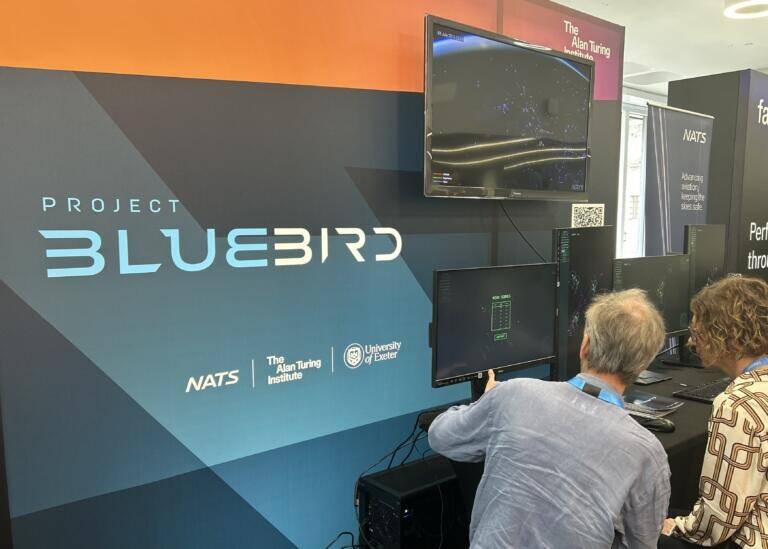
It's also important to note that we’ve made a deliberate effort to immerse ourselves in each other’s domains – our industry experts are involved in shaping and contributing to academic research, and our academic partners have been upskilled in the operational and safety-critical world of air traffic management.

Collaboration is absolutely essential to Project Bluebird. The project is built on a strategic partnership between NATS, the University of Exeter and the Alan Turing Institute, and it wouldn’t exist without this collaboration between industry and academia.
This partnership is essential for a project as complex as Bluebird which requires deep, specialised expertise across both air traffic management and advanced data science. That level of expert knowledge doesn’t exist in a single organisation, which is why this strategic partnership is so vital. Each partner brings unique expertise to the table, and it’s only by working together that we can address the full complexity of the challenge.
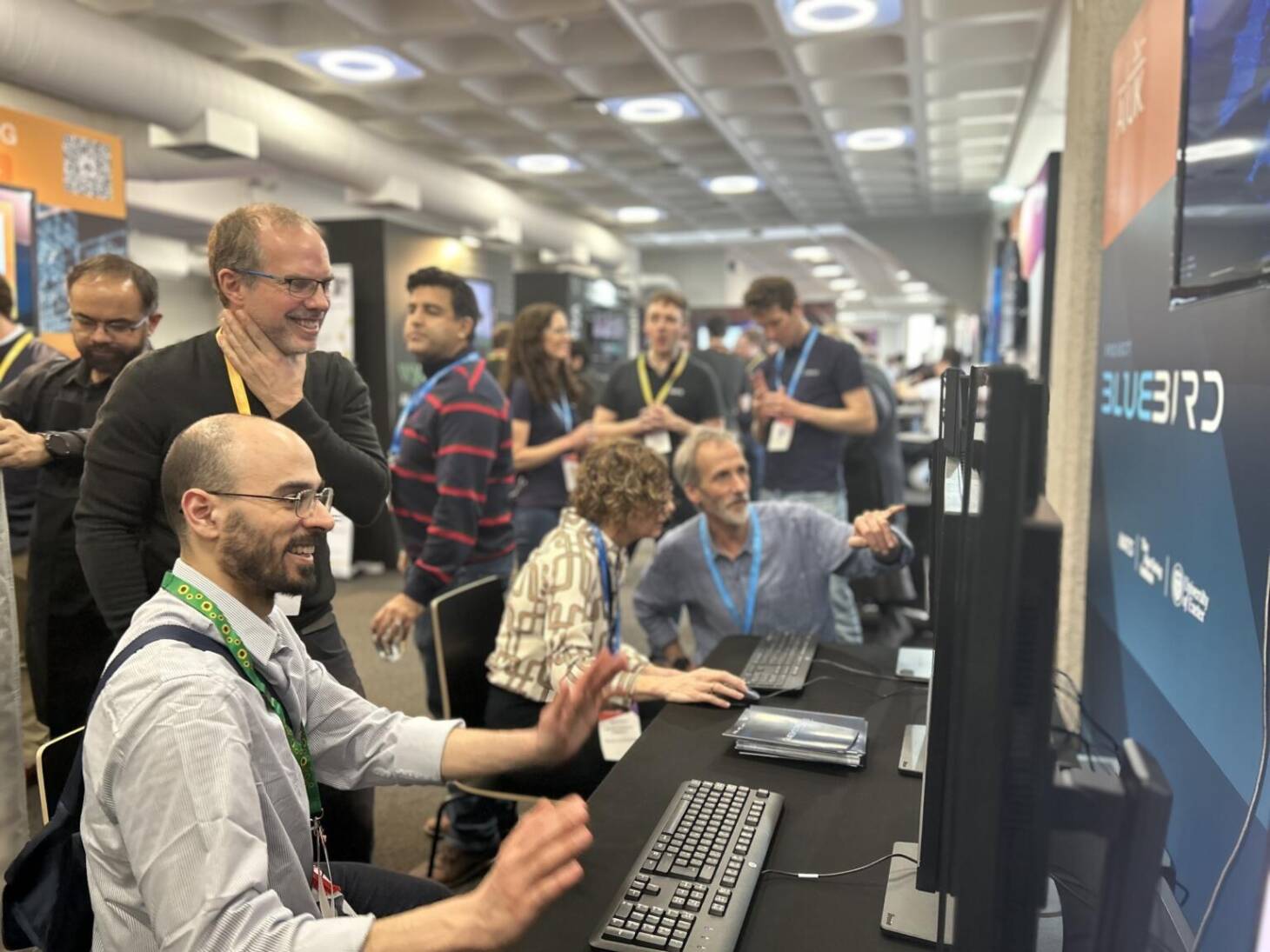
We take a flexible and agile approach to how we work together as a partnership, always aiming to get the most value from the collaboration. We have regular meetings as a team, in addition to an in-person plenary session which rotates every month between the three partners.
One of the most important aspects of our collaborative process is that we don’t rely on hierarchy. We’ve made a conscious effort to build a community across the three institutions, where contributions are valued regardless of role or organisation. Teams are empowered to speak directly to whoever can best help solve a problem or move work forward, without needing to go through formal channels.
There is a strong sense of shared purpose across the project, and a genuine excitement about what we have achieved so far – and what’s still to come.
However, coupled with analytical results, the assessment confirmed that the underlying design was solid – the real issue was processing power, not the agent’s method and logic. So rather than redesigning it, we’ll focus on improving the code to help it run more smoothly in real time, and recourse the agent later in the year.
The results from the agent’s live trial have given us a lot to work on. Although the agents failed this initial test, a pass or fail wasn’t the aim. Project Bluebird exists to ensure air traffic controllers have the data and AI-driven technology to help them manage the extra demands on our airspace.
We recently completed our first set of trials where we tested the Bluebird agents on a series of radar skills exams that our trainee air traffic controllers must take in our training college. This was essential for us to make the research we have been conducting relevant and to hold it to account. We wanted to test how well the digital twin copes under the same scrutiny that our trainee air traffic controllers come under in this test, to make it as realistic as possible.
Each AI agent was developed just far enough to test its potential. This kept development quick and efficient while still allowing us to evaluate its core strengths and development potential. In one case, we had to limit how far ahead an agent could plan so it could work in real time exam conditions with the instructor. That helped it to respond quickly in the moment, but it sometimes struggled with long-term planning and teamwork, which caused it to fail the summative.


The Bluebird partnership has opened up some fantastic opportunities for both the partner organisations and the individuals working on the project. Most notably, we recently launched our first Centre for Doctorial Training (CDT) in collaboration with the University of Exeter, which wouldn’t have been possible without this partnership.
The CDT will offer PhD’s in Air Traffic Management, with students working on how AI can support aviation and engineering in the future. We have also welcomed interns and PhD students to work on the project, several of whom have returned to continue their work as post-graduates at the Turing Institute.
This year, we’re looking forward to hosting international secondments from the Massachusetts Institute of Technology (MIT) and John Hopkins University – a great reflection of Bluebird's growing global reputation.
Looking ahead, we’re exploring potential new projects in Quantum Computing, which have emerged directly through connections made as part of Project Bluebird.
Close
Richard Cannon, Principal Researcher AI & Digital Twins, NATS

Our immediate aspiration is to develop the digital twin into a practical tool that accurately mirrors live operations. To achieve this, we’re now focusing on implementing the key safety learnings identified during our initial trials, helping us create a realistic and reliable representation of UK airspace.
Collaboration between the partners and our colleagues in the NATS training college is essential to this. Without access to the test environments and the insight of examiners, we wouldn’t be able to identify where adjustments are needed or how best to reflect real-world conditions.
We are now incorporating weather simulations to see how the agent navigates adverse weather conditions – a crucial consideration in UK airspace.
Richard Cannon, Principal Researcher AI & Digital Twins at UK air navigation service provider, NATS says the creation of a digital twin of UK airspace is providing invaluable insights.

Richard Cannon, Principal Researcher AI & Digital Twins, NATS
The aim of Project Bluebird is to create the first digital twin of UK airspace, which allows us to safely explore the potential of artificial intelligence (AI) within aviation.
As demand for access to UK airspace continues to grow, we must find new ways to manage the increasing complexity and congestion in our skies. By creating a digital twin that accurately reflects real-world operations, we can use AI to test and improve our systems, processes and safety procedures in a controlled, risk-free environment.
Crucially, we have designed this digital twin in such a way that the AI agents controlling traffic must operate within the same rigorous safety constraints that govern live air traffic. This ensures the insights we gain are both realistic and applicable to real-world operations, giving us a credible roadmap for future innovation.
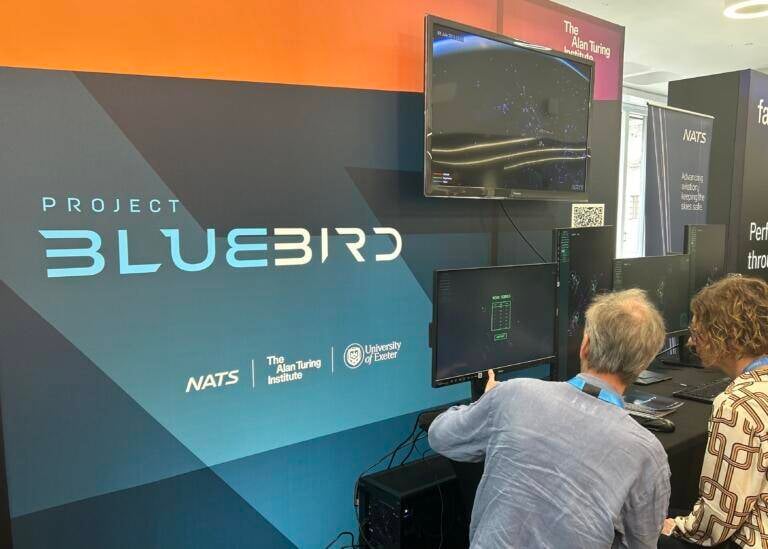
It's also important to note that we’ve made a deliberate effort to immerse ourselves in each other’s domains – our industry experts are involved in shaping and contributing to academic research, and our academic partners have been upskilled in the operational and safety-critical world of air traffic management.
Collaboration is absolutely essential to Project Bluebird. The project is built on a strategic partnership between NATS, the University of Exeter and the Alan Turing Institute, and it wouldn’t exist without this collaboration between industry and academia.
This partnership is essential for a project as complex as Bluebird which requires deep, specialised expertise across both air traffic management and advanced data science. That level of expert knowledge doesn’t exist in a single organisation, which is why this strategic partnership is so vital. Each partner brings unique expertise to the table, and it’s only by working together that we can address the full complexity of the challenge.
We take a flexible and agile approach to how we work together as a partnership, always aiming to get the most value from the collaboration. We have regular meetings as a team, in addition to an in-person plenary session which rotates every month between the three partners.
One of the most important aspects of our collaborative process is that we don’t rely on hierarchy. We’ve made a conscious effort to build a community across the three institutions, where contributions are valued regardless of role or organisation. Teams are empowered to speak directly to whoever can best help solve a problem or move work forward, without needing to go through formal channels.
There is a strong sense of shared purpose across the project, and a genuine excitement about what we have achieved so far – and what’s still to come.
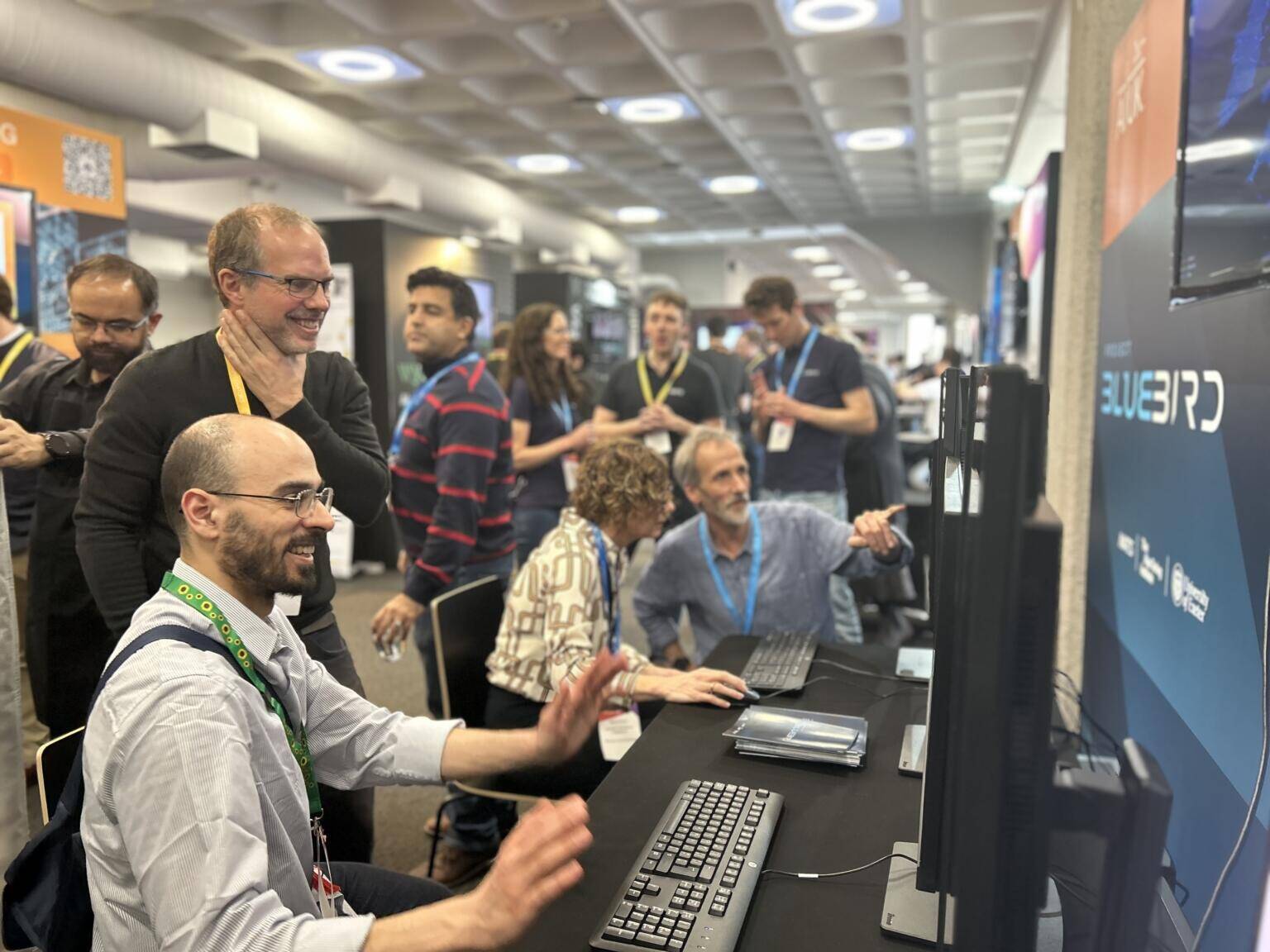
We recently completed our first set of trials where we tested the Bluebird agents on a series of radar skills exams that our trainee air traffic controllers must take in our training college. This was essential for us to make the research we have been conducting relevant and to hold it to account. We wanted to test how well the digital twin copes under the same scrutiny that our trainee air traffic controllers come under in this test, to make it as realistic as possible.
Each AI agent was developed just far enough to test its potential. This kept development quick and efficient while still allowing us to evaluate its core strengths and development potential. In one case, we had to limit how far ahead an agent could plan so it could work in real time exam conditions with the instructor. That helped it to respond quickly in the moment, but it sometimes struggled with long-term planning and teamwork, which caused it to fail the summative.
However, coupled with analytical results, the assessment confirmed that the underlying design was solid – the real issue was processing power, not the agent’s method and logic. So rather than redesigning it, we’ll focus on improving the code to help it run more smoothly in real time, and recourse the agent later in the year.
The results from the agent’s live trial have given us a lot to work on. Although the agents failed this initial test, a pass or fail wasn’t the aim. Project Bluebird exists to ensure air traffic controllers have the data and AI-driven technology to help them manage the extra demands on our airspace.
The Bluebird partnership has opened up some fantastic opportunities for both the partner organisations and the individuals working on the project. Most notably, we recently launched our first Centre for Doctorial Training (CDT) in collaboration with the University of Exeter, which wouldn’t have been possible without this partnership.
The CDT will offer PhD’s in Air Traffic Management, with students working on how AI can support aviation and engineering in the future. We have also welcomed interns and PhD students to work on the project, several of whom have returned to continue their work as post-graduates at the Turing Institute.
This year, we’re looking forward to hosting international secondments from the Massachusetts Institute of Technology (MIT) and John Hopkins University – a great reflection of Bluebird's growing global reputation.
Looking ahead, we’re exploring potential new projects in Quantum Computing, which have emerged directly through connections made as part of Project Bluebird.
Richard Cannon, Principal Researcher AI & Digital Twins, NATS
Our immediate aspiration is to develop the digital twin into a practical tool that accurately mirrors live operations. To achieve this, we’re now focusing on implementing the key safety learnings identified during our initial trials, helping us create a realistic and reliable representation of UK airspace.
Collaboration between the partners and our colleagues in the NATS training college is essential to this. Without access to the test environments and the insight of examiners, we wouldn’t be able to identify where adjustments are needed or how best to reflect real-world conditions.
We are now incorporating weather simulations to see how the agent navigates adverse weather conditions – a crucial consideration in UK airspace.