

SESAR Deployment Manager is continuing to provide European airspace with the tools necessary to advance future skies.




SDM is working on Common Project 1 (CP1), which will conclude at the end of 2027. Its Executive Director, Mariagrazia La Piscopia, says almost half (46 per cent) of the work is already completed, with functionalities like Flexible Use of Airspace and Network Collaborative Management available everywhere and many others already at an advanced stage. By the end of 2025, Free Route Airspace will also be completed in 96 per cent of Europe
“The work will bring €34 billion of benefits by 2035 and €52 billion by 2040,” she says. “There is a 6:7 cost-benefit ratio, which is exceptional by any standard.”
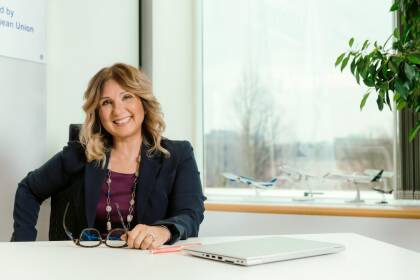
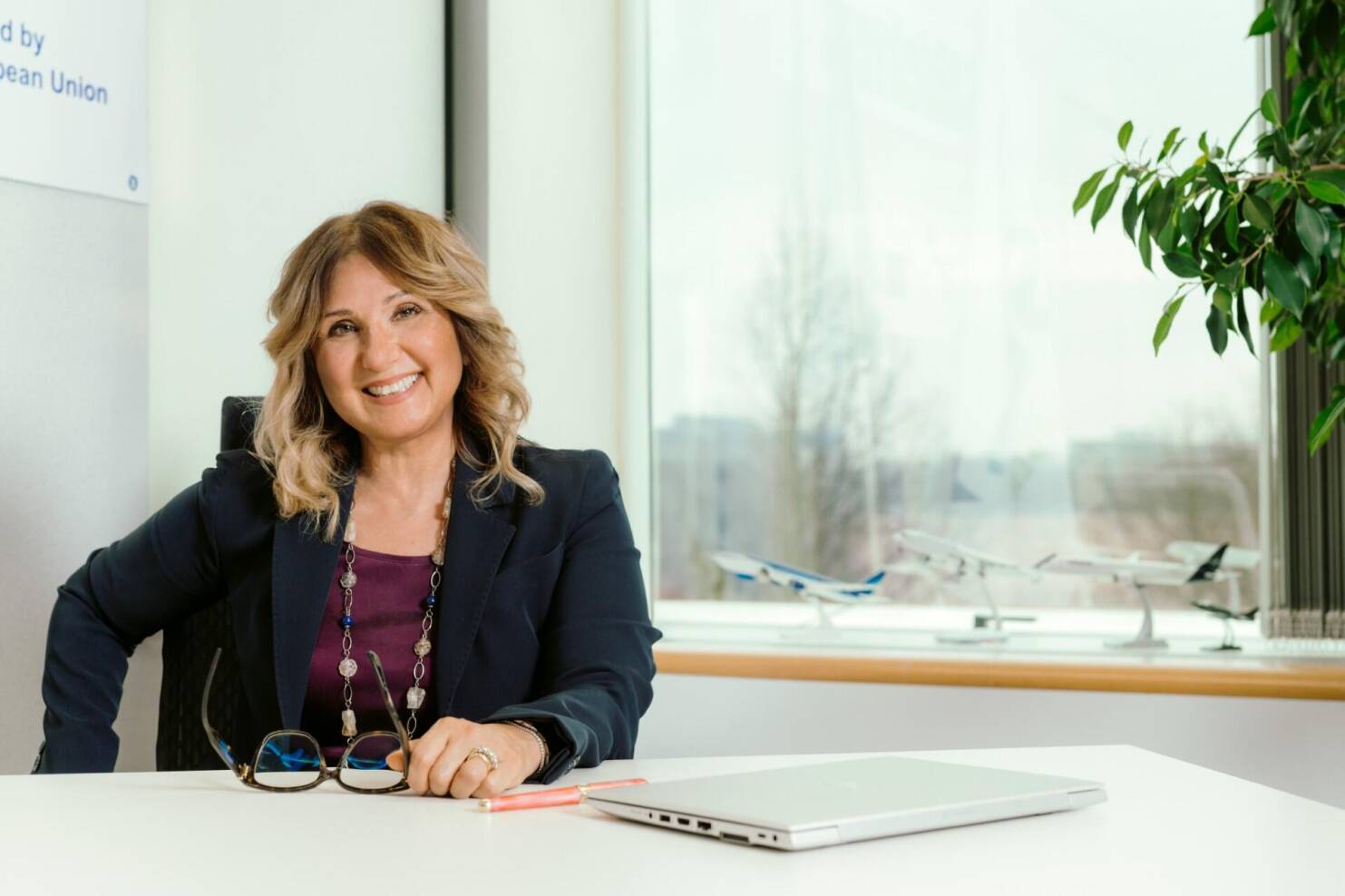
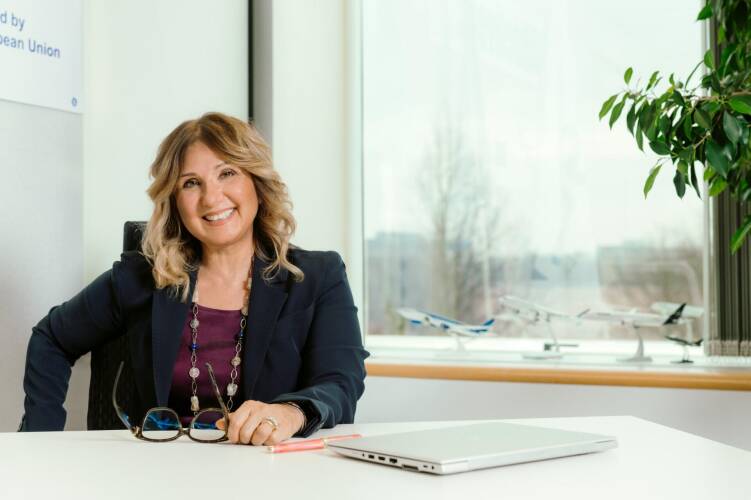
Mariagrazia La Piscopia, Executive Director - SESAR Deployment Manager
An industrial partnership, SDM coordinates actions to achieve the European ATM Master Plan and realise the vision of the Single European Sky.
Modernising air traffic management (ATM) is critical to handling the expected surge in traffic volume. In Europe, that task is supported by SESAR (Single European Sky ATM Research) Deployment Manager (SDM).

But there are some critical areas to improve for CP1 to be considered a complete success, specifically the acceleration of system-wide information management (SWIM) systems and greater implementation of trajectory-based operations (TBO).
“SWIM is vital because how we share data underpins everything we are trying to do,” says La Piscopia. “Everybody needs to be on the same page in this respect before we can progress further.”
TBO is a similarly essential tool as it is the key to unlocking capacity within constrained airspace. It will be part of the service architecture necessary to create the building blocks for truly seamless skies.
TBO is also fundamental to sustainability efforts and can save massive amounts of fuel and so reduce carbon dioxide emissions. Along with cross-border free route airspace and other CP1 elements, TBO will help to save some 10 million tonnes of jet fuel, equating to roughly 30 million tonnes of CO2.
Many of CP1’s 350-plus projects will also play a part in sustainability. There are, for example, multiple projects that are enhancing efficiency at airports, such as taxiing and terminal manoeuvring, that are contributing to fuel savings and CO2 reduction, as well as many projects that allow aircraft to flight shorter and less polluting flight paths.
“At the management and governance levels, we have the best possible expertise and get a big picture view,” says La Piscopia. “And we are seeing investment in the right projects.”
She adds that an industry team creates a trust framework despite the different capabilities and priorities among the key stakeholders. The alignment is excellent, allowing for synchronisation and synergies for all parties. Any shortcomings are quickly identified and the lessons learned disseminated across all projects.
“More funding and reconfirming the strong coordinator role would certainly help,” says La Piscopia. “Let’s see what the next financial framework brings. I hope that we get the funding because Europe is asking a lot of the industry. It wants us to be digital, greener and more competitive, but we need the right finance and partnerships to make this happen.
“We must protect for the future, where the industry and investors can get together and make combined decisions,” she adds. “That is essential to trust and buy-in and will accelerate deployment.”
All in all, La Piscopia is happy with the progress to date. She acknowledges that there are areas of improvements but insists that SESAR’s achievements compare favourably with the rest of the world.
“Of course, we must work faster because traffic is growing and the sustainability requirements are acute,” she says. “But that can’t take away from the work done to date and the incredible progress we have made.”
Working faster will require even greater collaboration. The entire aviation ecosystem has been involved across SDM’s myriad initiatives and this must continue. Airlines, airports, other service providers and ground handlers have joined air navigations service providers in ensuring that the projects are a success. The business model is working.
Close

Equally vital will be transitioning the skills needed to optimise the tools made available through SDM.
La Piscopia is clear that technology should always be seen as support for the human and not the replacement. That isn’t to play down the importance of technology as it will be the only way to handle airspace complexity in the years to come. But despite the undoubted potential in artificial intelligence and automation, a human will always sit at the centre of operations.
Nevertheless, the industry needs to understand how these tools will work, the possible limitations and the knowledge needed to leverage their full scope. The skillset and the training required to reach that skillset will change.
“And that is why change management will be the most important skill of all,” concludes SDM’s Executive Director. “The industry is going through a major transformation. Thanks to SDM and CP1, we are making significant progress on that journey. We have achieved a lot. But the journey will become more difficult, not easier, the further we go. If SDM is given the framework and the finance it needs, though, then I am sure we can reach our destination safely, efficiently and sustainably.”
SESAR Deployment Manager facts
To date, more than €3 billion has been invested
€1.4 billion has come through grants, the remainder through industry investment
260.6 million minutes will be saved in flight time by 2035
318 projects have been completed, 38 are ongoing
For every one euro spent, 4.3kg of CO2 has been saved


SESAR Deployment Manager is continuing to provide European airspace with the tools necessary to advance future skies.
Safety
Mariagrazia La Piscopia, Executive Director - SESAR Deployment Manager
SDM is working on Common Project 1 (CP1), which will conclude at the end of 2027. Its Executive Director, Mariagrazia La Piscopia, says almost half (46 per cent) of the work is already completed, with functionalities like Flexible Use of Airspace and Network Collaborative Management available everywhere and many others already at an advanced stage. By the end of 2025, Free Route Airspace will also be completed in 96 per cent of Europe
“The work will bring €34 billion of benefits by 2035 and €52 billion by 2040,” she says. “There is a 6:7 cost-benefit ratio, which is exceptional by any standard.”

An industrial partnership, SDM coordinates actions to achieve the European ATM Master Plan and realise the vision of the Single European Sky.
Modernising air traffic management (ATM) is critical to handling the expected surge in traffic volume. In Europe, that task is supported by SESAR (Single European Sky ATM Research) Deployment Manager (SDM).
But there are some critical areas to improve for CP1 to be considered a complete success, specifically the acceleration of system-wide information management (SWIM) systems and greater implementation of trajectory-based operations (TBO).
“SWIM is vital because how we share data underpins everything we are trying to do,” says La Piscopia. “Everybody needs to be on the same page in this respect before we can progress further.”
TBO is a similarly essential tool as it is the key to unlocking capacity within constrained airspace. It will be part of the service architecture necessary to create the building blocks for truly seamless skies.
TBO is also fundamental to sustainability efforts and can save massive amounts of fuel and so reduce carbon dioxide emissions. Along with cross-border free route airspace and other CP1 elements, TBO will help to save some 10 million tonnes of jet fuel, equating to roughly 30 million tonnes of CO2.
Many of CP1’s 350-plus projects will also play a part in sustainability. There are, for example, multiple projects that are enhancing efficiency at airports, such as taxiing and terminal manoeuvring, that are contributing to fuel savings and CO2 reduction, as well as many projects that allow aircraft to flight shorter and less polluting flight paths.
All in all, La Piscopia is happy with the progress to date. She acknowledges that there are areas of improvements but insists that SESAR’s achievements compare favourably with the rest of the world.
“Of course, we must work faster because traffic is growing and the sustainability requirements are acute,” she says. “But that can’t take away from the work done to date and the incredible progress we have made.”
Working faster will require even greater collaboration. The entire aviation ecosystem has been involved across SDM’s myriad initiatives and this must continue. Airlines, airports, other service providers and ground handlers have joined air navigations service providers in ensuring that the projects are a success. The business model is working.
“At the management and governance levels, we have the best possible expertise and get a big picture view,” says La Piscopia. “And we are seeing investment in the right projects.”
She adds that an industry team creates a trust framework despite the different capabilities and priorities among the key stakeholders. The alignment is excellent, allowing for synchronisation and synergies for all parties. Any shortcomings are quickly identified and the lessons learned disseminated across all projects.
“More funding and reconfirming the strong coordinator role would certainly help,” says La Piscopia. “Let’s see what the next financial framework brings. I hope that we get the funding because Europe is asking a lot of the industry. It wants us to be digital, greener and more competitive, but we need the right finance and partnerships to make this happen.
“We must protect for the future, where the industry and investors can get together and make combined decisions,” she adds. “That is essential to trust and buy-in and will accelerate deployment.”

SESAR Deployment Manager facts
To date, more than €3 billion has been invested
€1.4 billion has come through grants, the remainder through industry investment
260.6 million minutes will be saved in flight time by 2035
318 projects have been completed, 38 are ongoing
For every one euro spent, 4.3kg of CO2 has been saved
Equally vital will be transitioning the skills needed to optimise the tools made available through SDM.
La Piscopia is clear that technology should always be seen as support for the human and not the replacement. That isn’t to play down the importance of technology as it will be the only way to handle airspace complexity in the years to come. But despite the undoubted potential in artificial intelligence and automation, a human will always sit at the centre of operations.
Nevertheless, the industry needs to understand how these tools will work, the possible limitations and the knowledge needed to leverage their full scope. The skillset and the training required to reach that skillset will change.
“And that is why change management will be the most important skill of all,” concludes SDM’s Executive Director. “The industry is going through a major transformation. Thanks to SDM and CP1, we are making significant progress on that journey. We have achieved a lot. But the journey will become more difficult, not easier, the further we go. If SDM is given the framework and the finance it needs, though, then I am sure we can reach our destination safely, efficiently and sustainably.”